
“The pitcher cries for water to carry
and a person for the work that is real.”

The Great Rose Window at the Cathedral of St. John the Divine (JMS photo)
Sitting in a wooden chair in NYC’s majestic St. John the Divine Cathedral on May 24, 2001, I got chills as President Gussie Kapner read those lines from Marge Piercy’s beloved poem, “To Be of Use.” I was graduating with a Master’s in Early Adolescent Education from Bank Street College, and it had been a rough year.
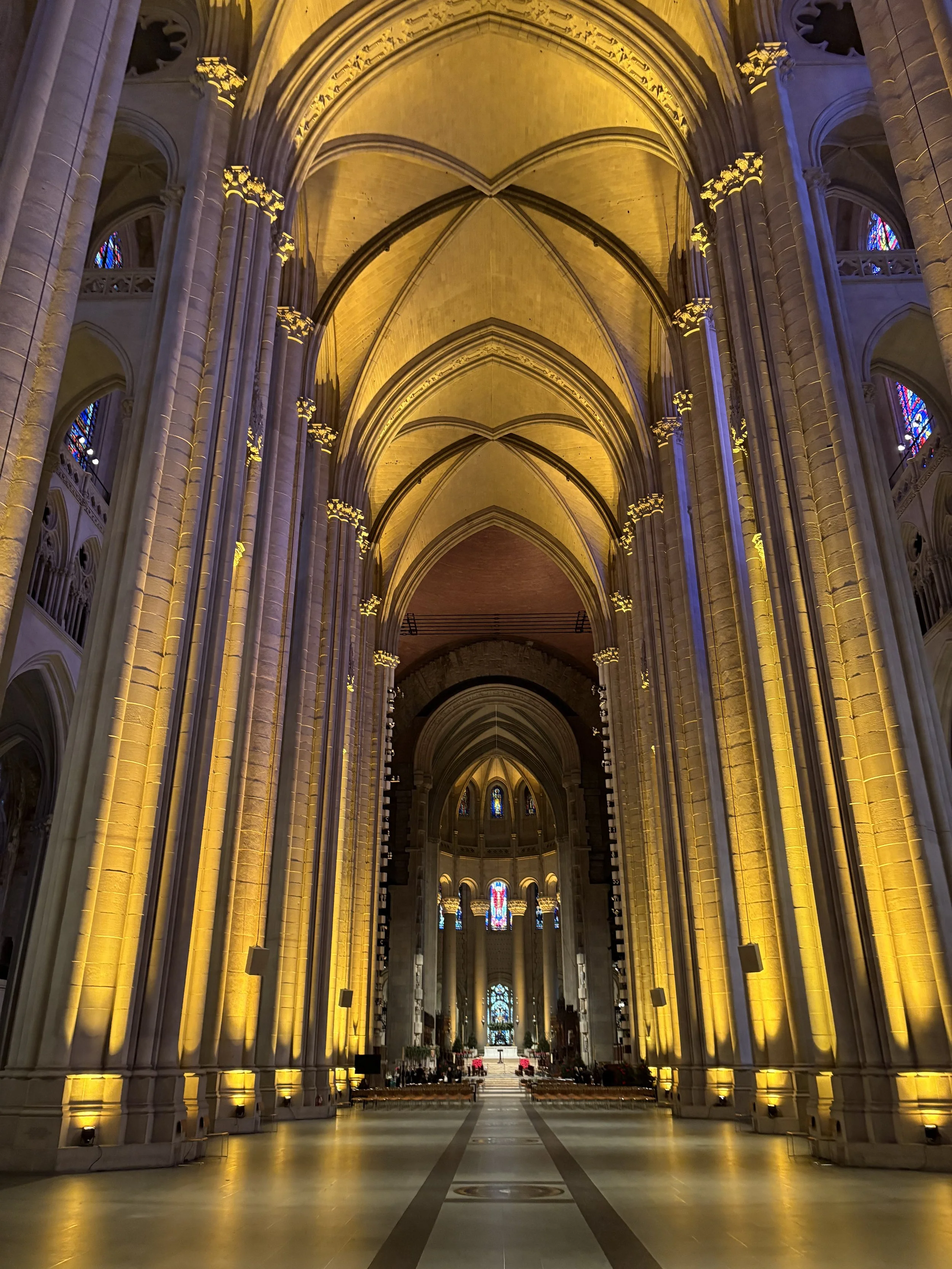
Cathedral of St. John the Divine in Dec 2025 (JMS photo)
I had slogged through my student teaching and coursework while battling a depression I didn't yet recognize. I was exhausted, lonely, and I was deeply disillusioned. Bank Street offered a warm and welcoming community, but my closest friends had moved away, and I had underestimated how much their presence kept me grounded. By any institutional measure, I was a successful student, but I hadn’t yet learned to listen to my body, to cultivate self-compassion, or to pace myself.
On top of fatigue and melancholy, I worried that so many of the key lessons I’d learned about leadership—growing up in Central New York, at Williams, at Harvard Business School, and in the school of life—seemed to be at odds with what I was finding in the institution of public education. Brilliant teachers, curious students, caring parents, hard-working administrators, and supportive taxpayers seemed trapped by a system designed to support the status quo, not innovation. Beyond the unrealized potential I’d felt as a student in rural New York, I now saw ways the structure itself conspired against the learning environments everyone sought—the very structures I was now being trained to create.
Hospice Care: Humans Trapped in a Dying System

What is the purpose of public education?
Five years later, after collaborating to launch two leadership initiatives at Harvard University (the HBS Leadership Initiative and the Public Education Leadership Project), I was only more discouraged. One conversation with school improvement coach Mutiu Fagbayi remains etched in my memory. He told me he saw his work as a form of “hospice care.” His mission was to care for the talented humans navigating a dying education system so they would be ready when a new structure finally emerged from its ashes.
Everything I saw validated his perspective. After interviewing hundreds of leaders, I did not sense a common purpose for public education. Instead, human efforts and hopes struggled against a system striving to meet (at minimum) six competing ideals simultaneously.
What is the purpose of public education?
Individual Development: Foster personal skills, self-discovery, passion, and autonomy.
The American Dream: Break cycles of poverty and provide universal access to social mobility.
Civic Responsibility: Develop citizens to participate in democratic governance and perpetuate stable societies informed by the “will of the people.”
Pragmatic Economics (a.k.a. “Get a Job”): Provide childcare for the working class, a reliable credentialing pipeline for the workforce, and, in some cases, vocational training.
Meritocracy (a.k.a. “Get into College”): Identify and rank the “most promising” students for entry into the higher education hierarchy and professional elite.
Community Cohesion & Cultural Assimilation: Socialize the next generation and build shared identity through traditions like high-school prom and football.
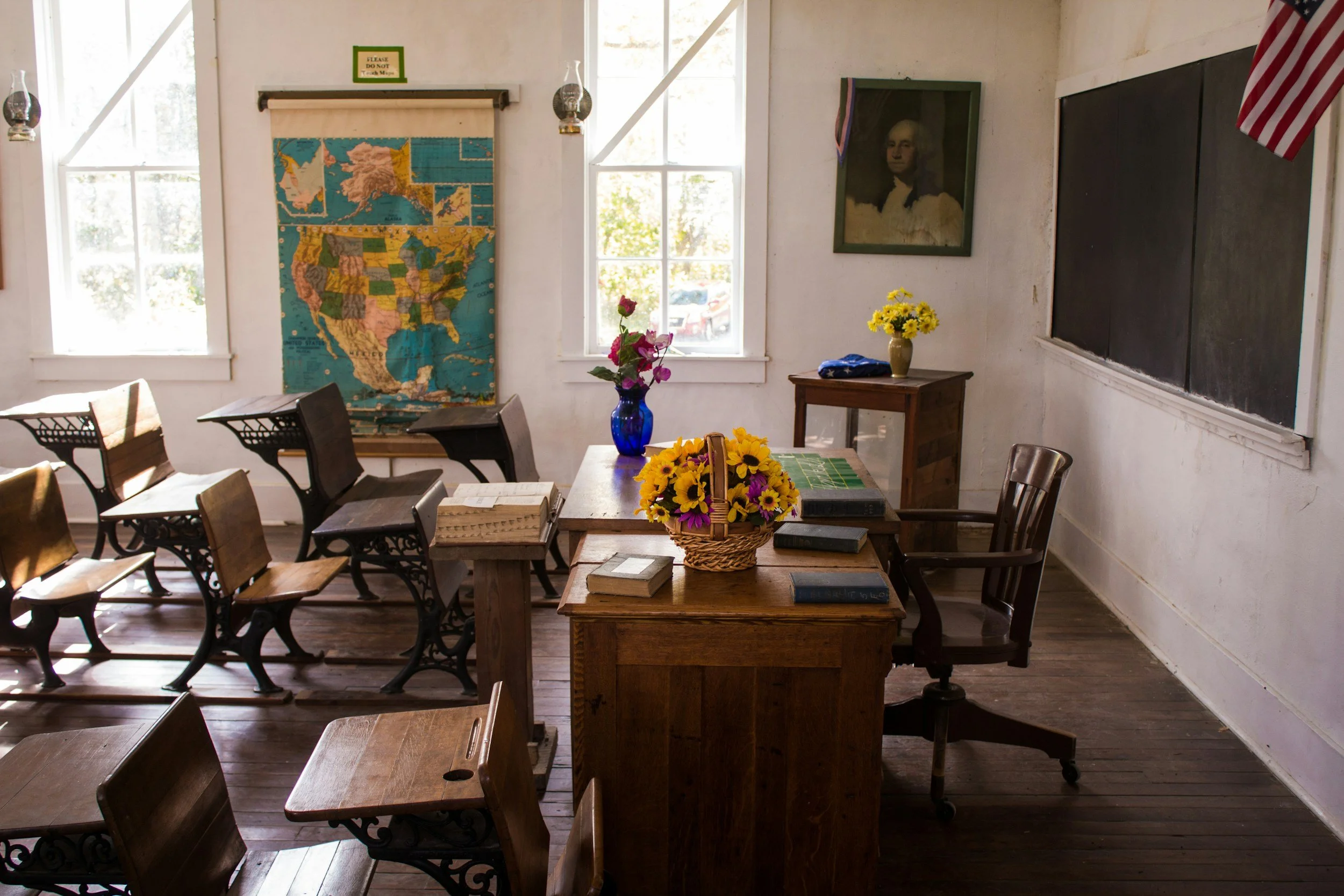
One common “school” stereotype.
No system can optimize for all these priorities. Watching the attempt was demoralizing. Most significantly, I sensed a near-total absence of collective will for change. There was vocal unhappiness, dispiriting results, plenty of advocacy, and no shortage of money, but by and large the “public” seemed unwilling and/or unable to sit down and do the hard work of compromising to establish something different.
While our education system has certainly evolved over centuries, from its early roots in religious and moral development, since the 1900s we have largely treated public education in the United States as a massive industrial machine that is constantly retrofitted but never truly rebuilt. Over the past century—through industrialization with its focus on standardization, sorting and obedience; desegregation attempts to ensure equity and access for every child; to today’s information age currently navigating an onslaught of changing technologies, communication modes, and analytic data—the underlying structure of the American school has remained fairly static.
Looking back at the last hundred years, I see a system defined by five core paradoxes:
Investment to Impact Ratio: The U.S. spends more per pupil than almost any other nation. The money exists, but it is often tied up in administrative overhead, pension debt, and facilities rather than direct classroom innovation.
Standardization: We abandoned the one-room schoolhouse for a factory model of efficiency. While this movement established a floor for basic literacy, it also fueled a culture of teaching to the test where developing individual capabilities is often eclipsed by the pursuit of high scores.
Curriculum: Even though schools are publicly funded, corporate publishing houses control the textbooks and digital platforms, meaning market forces in a few large states—not local communities or education experts—decide the de facto curriculum.
Instruction: Our nation’s teacher development pipeline remains a patchwork, resulting in high turnover among professionals who must navigate archaic tenure models and a system that treats them as 'interchangeable' while often paying them 25% less than their college-educated peers.
Achievement Gap: While high school graduation rates hit historic highs, the achievement gap between students remains stubbornly persistent. This success on paper masks a harsh reality: a high school diploma has decoupled from economic opportunity. In the mid-20th century, graduation provided a clear path to the middle class. Today, our system prioritizes standardized metrics over adaptable capabilities, and graduates face daunting entry-level barriers. Consequently, social mobility has slowed, leaving a generation stranded between obsolete credentials and a rapidly shifting market.
The Will to Work: Where We Are Today
Twenty years ago, I walked away from the political world of public education because I saw a sector paralyzed by insufficient will to tackle these conflicting priorities. I didn’t see how I could engage effectively, so I shifted to focus on leadership development and scaling innovation in the corporate and nonprofit sectors.
I have been privileged to spend the past two decades working alongside brilliant practitioners, while studiously gathering and refining a toolkit of best practices for leading innovation from creative icons like Pixar, the movement to end apartheid in South Africa, global philanthropic efforts to catalyze social impact, and the cutting-edge leadership development required for individuals in top roles to sustain these efforts.
Watching the unprecedented local mobilization in Chicago and Minneapolis over recent months has been a definitive turning point for me. These cities aren’t outliers; they indicate a broader national readiness is building.
I sense a profound shift is underway.

Selfie on Boston Common (2/28/26).
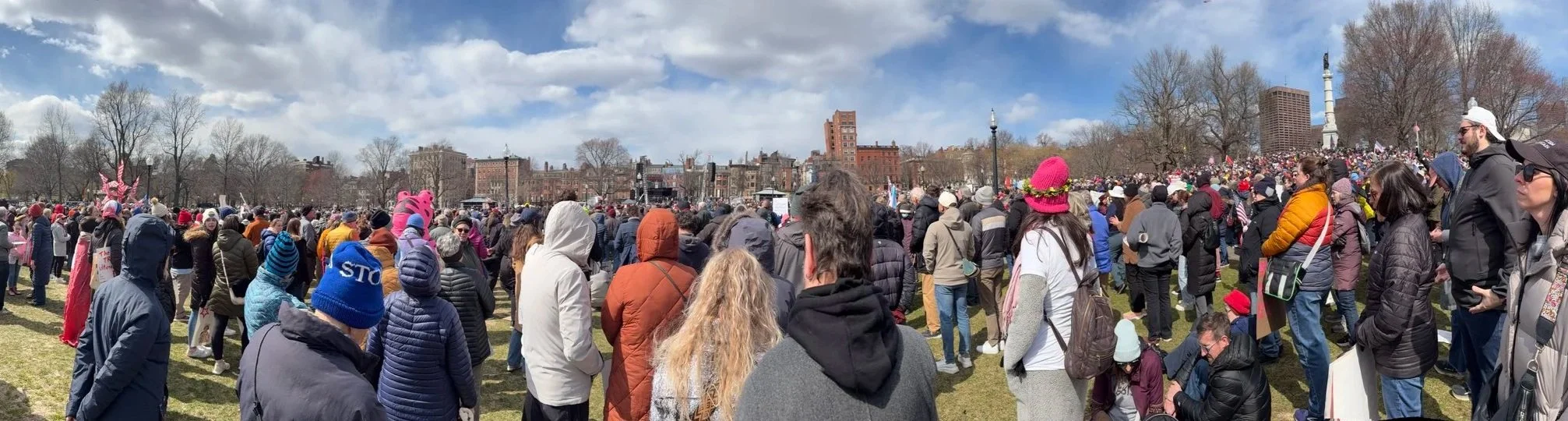
This past Saturday, I joined an estimated 180,000 neighbors on Boston Common. While official tallies will likely be debated, Newsweek reported that: Saturday's No Kings demonstrations “marked the largest single-day protests in U.S. history, with at least 8 million people gathering at more than 3,300 events across all 50 states and nearly every continent, according to organizers.” Reuters added organizers were reporting that “two-thirds of No Kings events were happening outside major cities, a nearly 40% jump for smaller communities from the movement's first mobilization last June.”
Where before I was defeated, I now feel a surge of massive, untapped collective will for change—not just in education, but across our entire governance system. People are not only frustrated, they seem willing to put their boots, minds, and hearts toward a new way of working together.
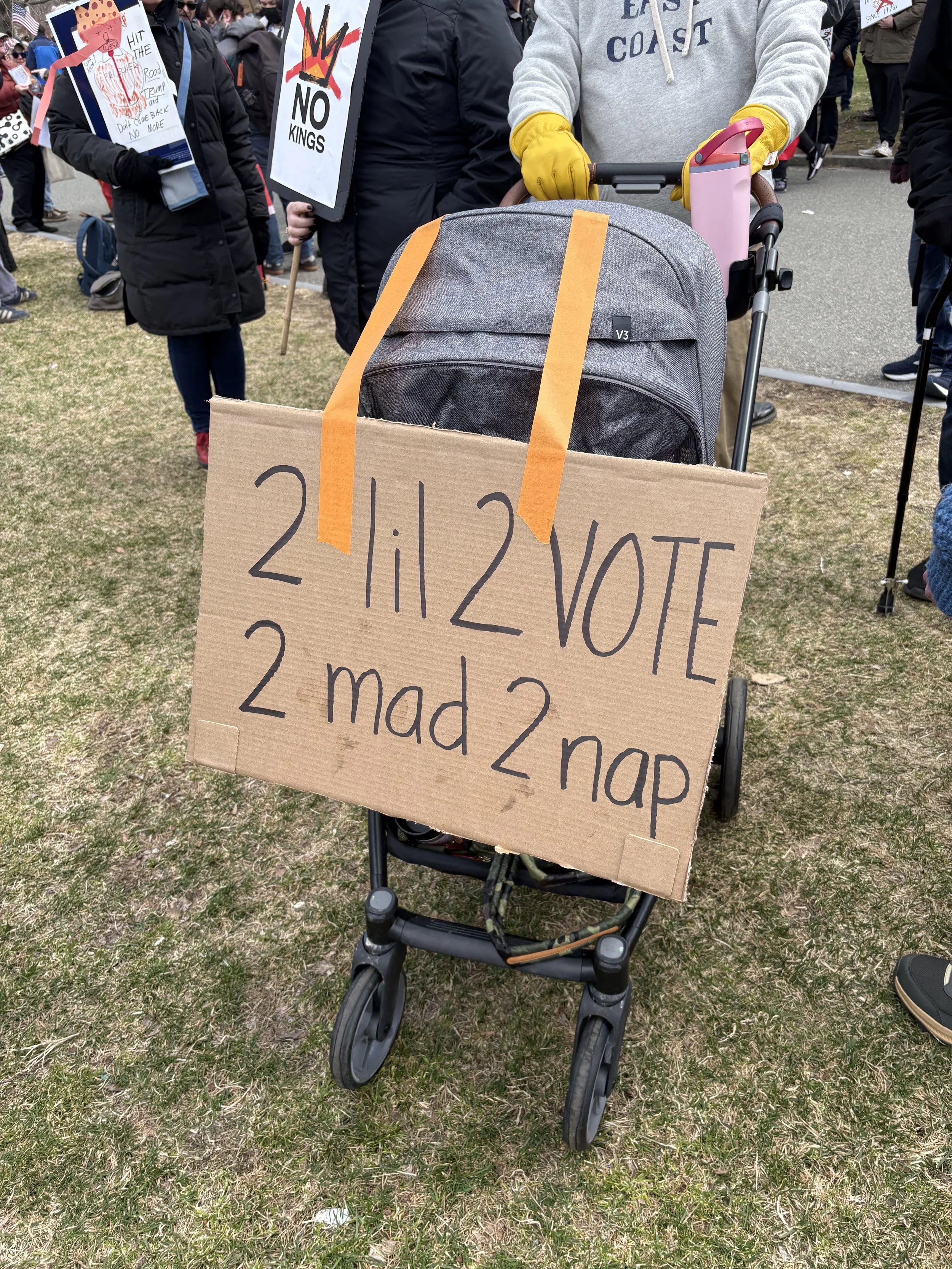
My favorite sign at Boston’s No Kings celebration.
When our schools graduate more people than ever only for them to find the paths to both economic stability and meaningful civic entry stalled, we must ask: what are we actually building? I can no longer focus solely on the classroom when the underlying governance structure—the very engine of our democracy—appears equally dysfunctional. If you ask anyone, you will hear near-universal cynicism regarding our nation's capacity for fair governance.
This leads me to a sobering conclusion: the U.S. federal infrastructure isn’t just malfunctioning; it’s working exactly as designed. We are operating within a misaligned, obsolete structure that has become a fundamental impediment to the nation it was meant to serve.
While many view this as a crisis, I see it also as a once-in-a-generation call to action. I sense an exciting possibility is at hand: to unleash and harness our collective will to update our democratic systems for governance and approach to civic engagement. Many have been doing this work, and I am excited to join their movement. In the coming weeks, I will share more about my choice to pivot my work entirely toward revitalizing our democracy.
More to come.