

Greetings from a snow-covered Boston!
I’ve been slow to post any updates because I wish many things were different and writing them down only makes them feel more true. I hope you and yours are holding together. I am holding it together some of the time.
Source: Protect Democracy
There’s a lot of good stuff happening mixed in with some horrifying things.
Not quite sure how to fit all that together into a fairly broad update for important people in my life who are all over the map (literally).
Most of you know I’m job searching, which is a roller coaster task at the best of times.
Thank you to everyone who has spent time listening, encouraging, or even just witnessing this journey. I am privileged to know you. I hope you'll reach out when it's convenient with your news or whenever (convenient or not) if you have requests for help. I'm here.
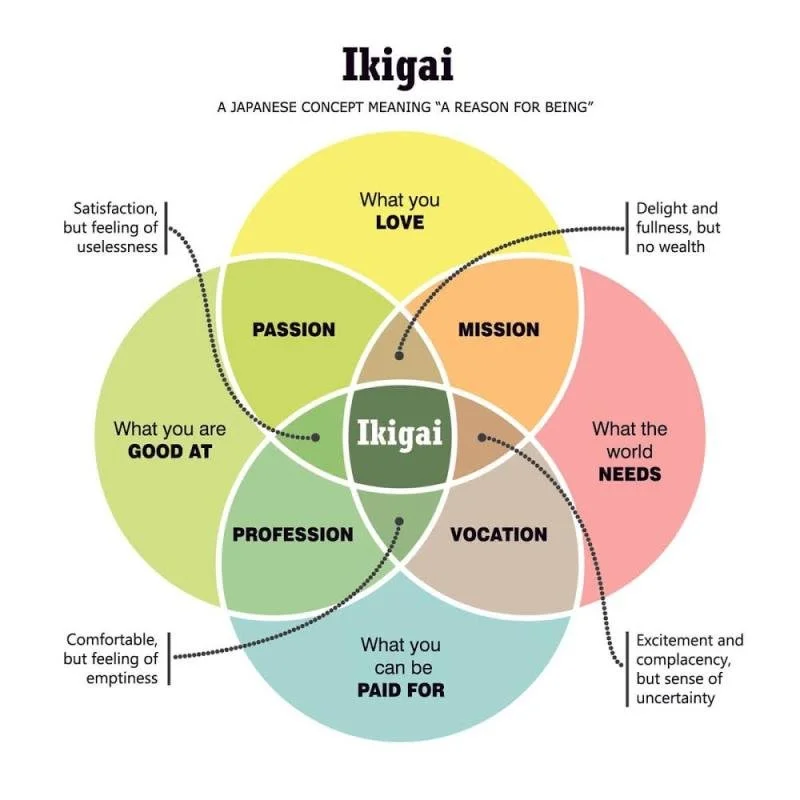
Image source: Dreamstime (Toronto Star Graphic)
My Ideal Job
After many years of consulting, I’m excited to go in house again. I’ve gotten a LOT more clear on my goal (ikigai): a Collaboration Architect.
Of course this sounds WAY too wonky, so my friend Adam helped me find my metaphor to convey my value: I’m an emulsifier.
Like an egg stabilizes oil and water, I bond cutting-edge ideas with operational reality to create a steady, scalable organization. To that end, I’m seeking:
ROLE: An operations/innovation leadership position (COO/CIO) in a mid-sized organization (50–500 people) ready to scale. I’m here to build, not advise, the collective genius required for long-term impact.
MISSION: either regenerative economy (e.g. climate, conservation, sustainability) or civic infrastructure (e.g. building resilient, next generation education & democracy); to me, these are the flip sides of the same core issue.
“LOCAL” GEOGRAPHY: After 15 years primarily working remotely, my dream is to be in person at least once a month (ideally more) and to collaborate mostly in the same time zone. (That said, for the right team, I’d work with Singapore.)
Getting fancy, here’s how I unleash and harness untapped potential:
The WHO (Leadership): Cultivating the moral agency and leadership required to navigate this high-stakes moment.
The HOW (Strategic Collaboration): Building the culture and "connective tissue" needed to bridge diverse stakeholders.
The WHAT (Systems Transformation): Translating visionary ideas into sustainable, real-world infrastructure through rigorous experiments and the deep work of community building.
Three Ways You Can Help Me
I’m looking for a visionary team that needs an operational partner to turn "what if" into "what is." Thus:
If you know a CEO or leading philanthropist in the climate or democracy space who has a brilliant vision but needs an operational partner to build the engine, I’d love an intro.
I'm learning as fast as possible, so if you've read something amazing or know of an upcoming event I should attend, please share details.
Most significantly, you can imagine me in a year further along this path. I welcome courage, snacks, memes, hugs and laughs at any point.
I'll close by sharing three cool things I've encountered recently from three totally different realms. (These links will take you to their sites; there are also summaries of their ideas below.)
Practical: Naomi Hattaway’s 3 Document System (hoping to update with a better link)
Political: "We Need A New Great Awakening" by Ian Bassin and Rev. Paul Brandeis Raushenbush
With hope and courage,
Jen
Source: Naomi Hattaway
You’re going to leave this job eventually:
Death.
Retirement.
Better opportunity.
Burnout.
(and your organization isn’t ready)
I’ve watched too many talented people leave organizations in chaos—not because they wanted to, but because nobody taught them how to leave well.
The 3-document system isn’t about being replaceable. It’s about being responsible. When you leave (and you will leave), someone inherits your chaos or your clarity.
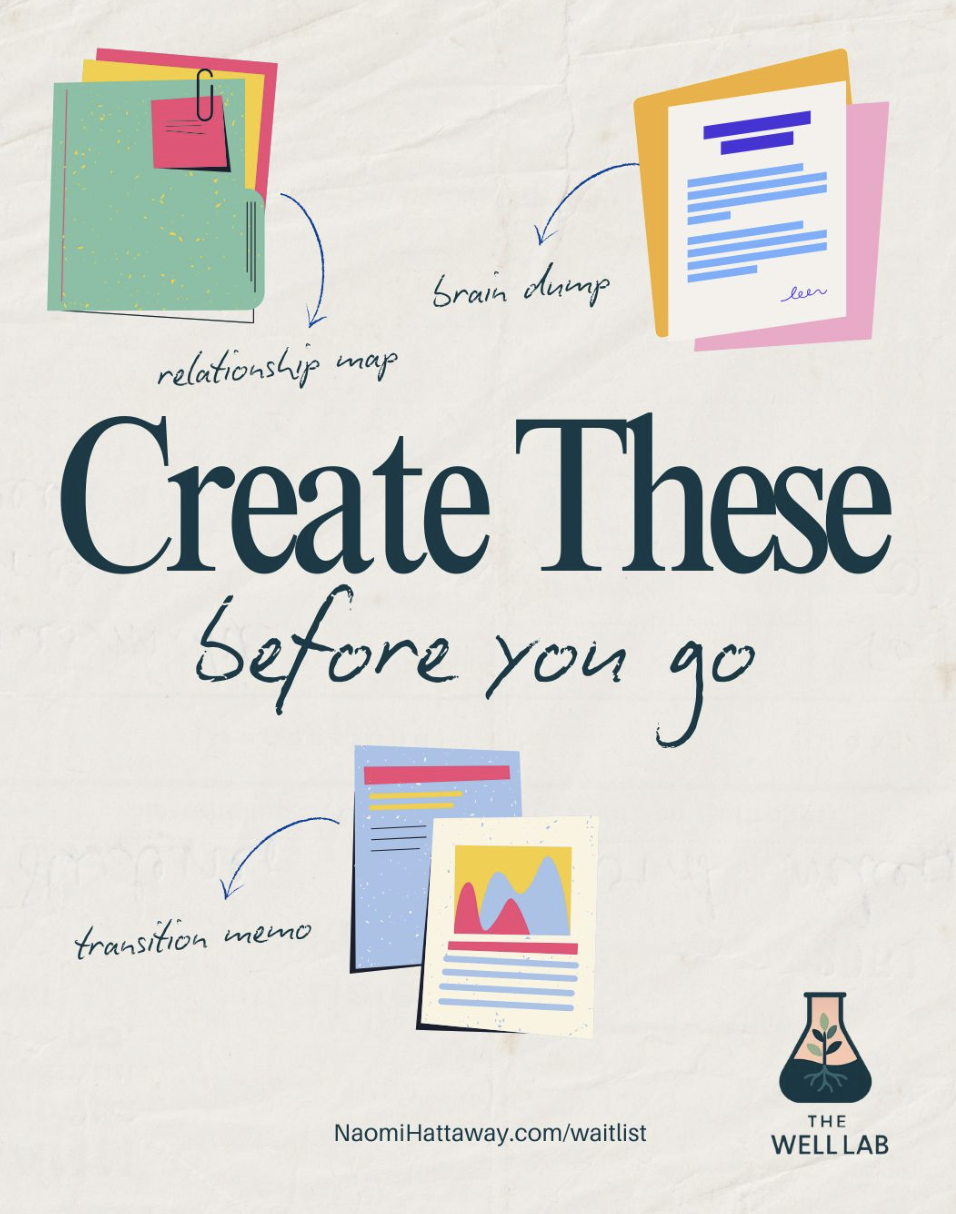
**Here’s what to create before you go**
DOCUMENT 1: The Brain Dump
Everything only you know. Passwords, recurring tasks, key contacts and their quirks, unwritten rules, workarounds, projects in progress. Simple Google Doc. Update quarterly.
DOCUMENT 2: THE RELATIONSHIP MAP
Who matters and why. Board members (what they care about), funders (communication preferences), partners (history and context), vendors (contracts), internal allies (who to trust). This is institutional memory.
DOCUMENT 3: The Transition Memo
What’s working, what’s not, what’s next. Wins from the past year, challenges ahead, pending decisions, systems that need fixing, cultural context your replacement should know. Write it like you’re handing off to esomeone you respect. Because you should be.
Start this TODAY:
→ Create the docs
→ Spend 15 minutes (to get you started)
→ Update them quarterly
Being proactive doesn’t mean you’re leaving soon. This is what it means to LEAD well and LEAVE well.
The organizations that do not prioritize documentation are the ones that panic during transitions. Don’t let their dysfunction become your emergency, or your responsibility.
Document anyway.
People leave. That’s not the problem.
Not preparing for it? That’s the problem.
I Want to Define The Circle
a 3.5 min poem/performance by Baratunde Thurston.
“When spreadsheets can analyze themselves
And emails can write themselves
When songs can sing themselves
And meetings can attend themselves
Then what are we going to do with all that time? ”
https://www.thebulwark.com/p/we-need-a-new-great-awakening
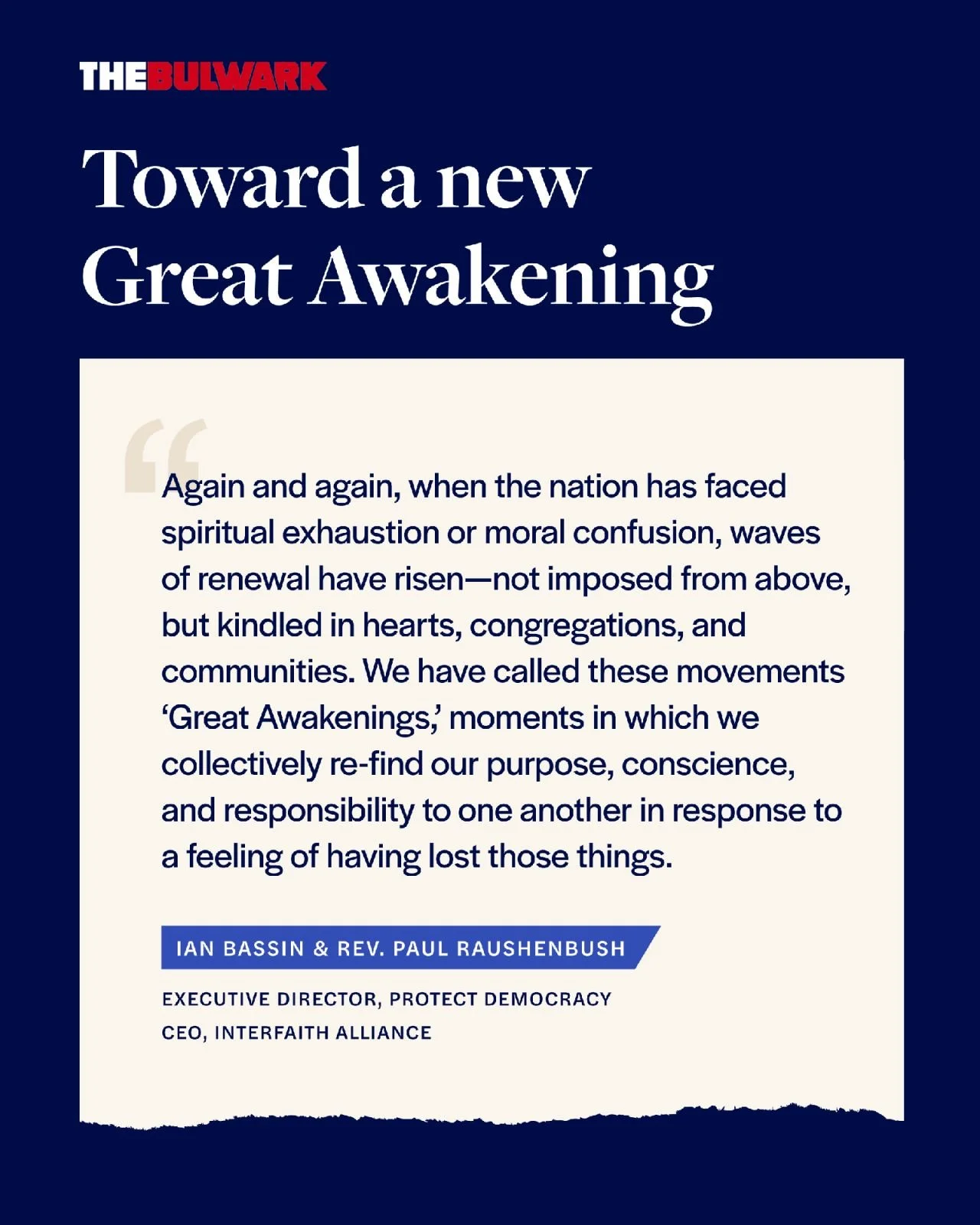
"We Need A New Great Awakening"
This essay by Ian Bassin and Rev. Paul Brandeis Raushenbush calls our nation to re-architect how we approach moral formation—a challenge echoed by thinkers like David Brooks and Bob Putnam.
Here are my three favorite lines:
“This is not merely a political crisis. It is a spiritual one.
Such an awakening would not ask us to agree on every doctrine or policy. It would ask something at once both simpler and harder: that we recover a shared moral horizon. That we remember democracy is not only a system of government but a practice of mutual regard. That decency is not weakness, and inclusion is not a threat. That freedom untethered from responsibility corrodes the soul of a people.
Every great awakening in American history arose not because conditions were ideal, but because they were intolerable. People sensed that the old ways were failing, and they dared to believe that renewal was possible.”